
2027 prospect file · Research cutoff: October 20, 2026
Jeremiah Smith gives the 2027 NFL draft a compelling question: when is a wide receiver the best use of the first overall pick? This profile examines the production behind the discussion, the team-building decision, and the evidence still needed to complete the projection.
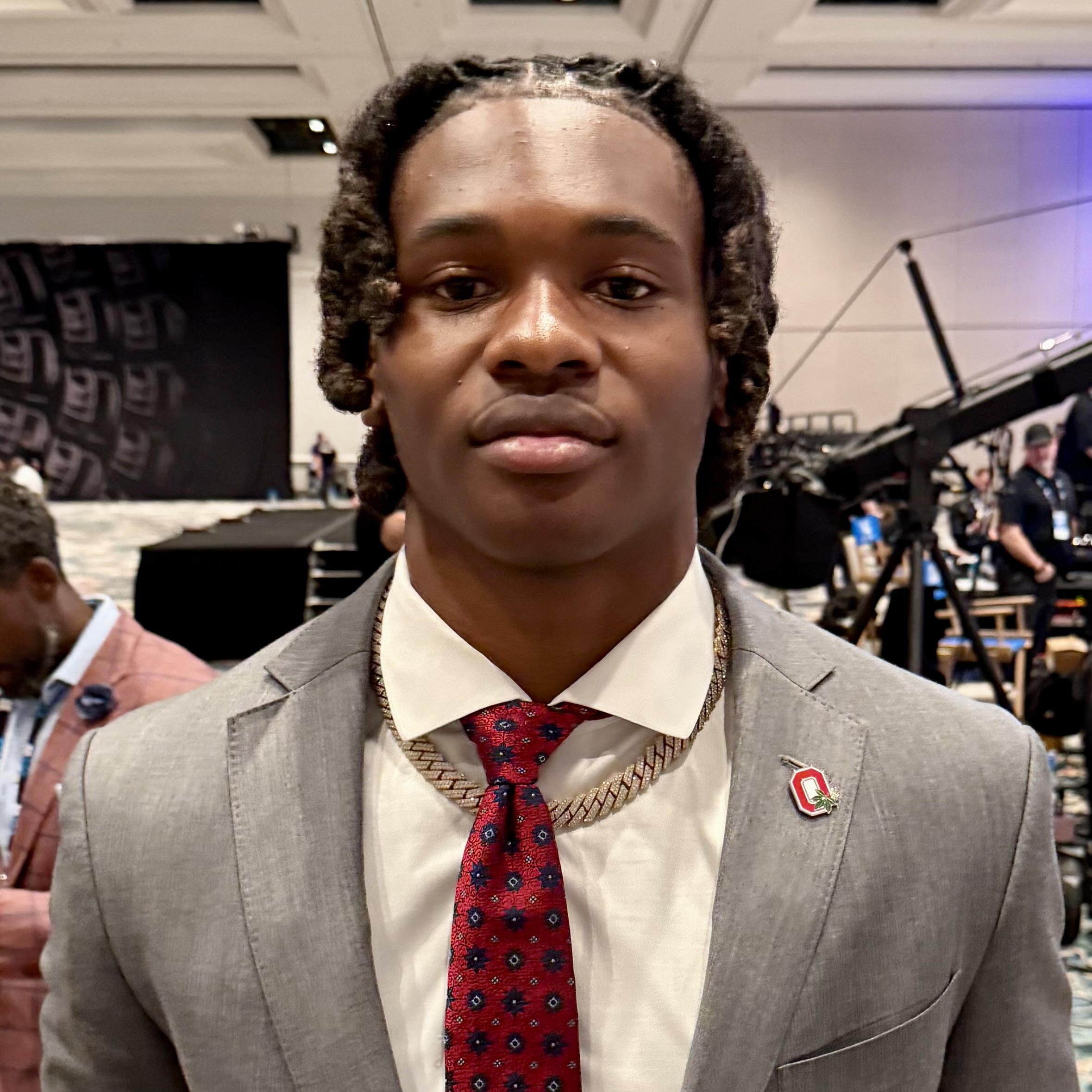

Jeremiah Smith: production at a glance
| Season | Games | Receptions | Receiving yards | Receiving TD |
|---|---|---|---|---|
| 2024 | 16 | 76 | 1,315 | 15 |
| 2025 | 13 | 87 | 1,243 | 12 |
Source: Ohio State career statistics, Jeremiah Smith, page 90.
The case begins with repeatable production
A first-round receiver should offer an offense a dependable way to create completions. A candidate for the first overall pick needs a stronger argument: his contribution must justify passing on the other uses of that selection. Jeremiah Smith belongs in that discussion because his college record contains meaningful production across more than one season, rather than one breakout performance.
Why the two-year record matters
The numbers above establish a substantial foundation. They also raise a more useful question than whether the totals look impressive: what produced them? A receiver can accumulate yardage through manufactured touches, vertical opportunities, difficult catches, or a combination. The evaluation should identify the mechanism before assuming the same output will follow him into a different offense.
Smith’s increased reception total in his second season is worth examining alongside the lower yards per catch. A change in the average does not automatically mean a player became less dangerous. It could reflect different routes, coverage, targets, or game situations. Without separating those factors, an evaluator risks mistaking a change in usage for a change in ability.
The No. 1 pick is a team-building question
Our opening mock sends Smith to the Chargers. The appeal is a receiving investment around an established quarterback, rather than a rule that the first pick must go toward replacing the passer. That is a roster-building judgment. It does not establish that receiver is the team’s only need or that the organization shares the projection.
The alternatives must remain part of the argument. A tackle could improve the conditions for every passing play. A trade could convert one premium opportunity into several. Choosing a receiver first requires confidence that the individual difference he creates outweighs those alternatives. “Best receiver” and “best use of the first pick” are related conclusions, but they are not identical.
What a professional role needs to answer
Start with where Smith would line up and how an offense would create his opportunities. A team should be able to describe the work it expects him to perform against press coverage, off coverage, and help over the top. The projection becomes more credible when it explains how the player fits ordinary downs, not just the most memorable catches.
Third-down reliability deserves separate attention from explosive production. On one play, an offense needs a receiver to gain a few yards on time. On another, it needs someone who can punish a defense for committing too many resources elsewhere. A premium receiving investment should make the coach’s choices easier in several situations.
An evidence checklist for the remaining season
The most valuable next step is a consistent set of questions. How does he enter a route when a defender disrupts the release? Does the timing survive contact? When the ball arrives, is the receiver protecting the opportunity or relying on a difficult adjustment? What happens on routes that are not targeted?
Those questions are evaluation priorities, not claims that a particular weakness has already been established. A useful profile distinguishes a demonstrated concern from an area that still needs documentation. It should also distinguish a successful catch from proof that the route was executed well.
Why we are avoiding a famous-player comparison
A familiar name can help describe a narrow trait. It can also smuggle an entire professional career into an evaluation. Smith’s case is stronger when it rests on his own evidence and a clearly defined role. Readers should not need to accept a comparison to understand why he belongs near the top of a mock draft.
DraftBlaster’s current view
Smith is the first selection in our opening 2027 mock. The central argument is investment in a premium receiving opportunity around an existing passer, supported by a multi-season production record. The remaining work is to document how the routes, releases, and receiving responsibilities translate against the range of assignments he would face professionally.
That is an October projection, not a settled outcome. We will revisit the evidence as the season develops, and explain any change in the selection rather than quietly rewriting the reasoning.
Related reading
2027 NFL Mock Draft · Prospect evaluation guide · Understanding draft statistics