
DraftBlaster reference library · Updated October 20, 2026
The NFL draft is both a football event and a method of distributing the opportunity to acquire new players. Its history helps explain why pick ownership, player evaluation, and uncertainty matter as much as the excitement of the first selection.
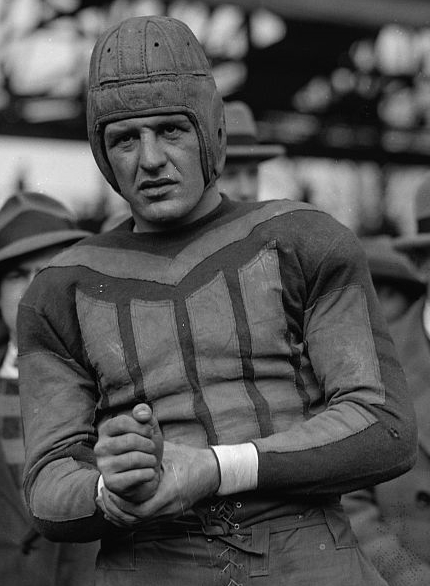

The beginning: 1936
The NFL adopted Bert Bell’s annual-draft proposal in 1935, with the first draft held the following year. Philadelphia selected University of Chicago halfback Jay Berwanger first on February 8, 1936. His rights were later traded to Chicago, but he never played professional football. These milestones are recorded in the NFL’s Record & Fact Book.
The first pick already contained a lesson
Berwanger’s story illustrates an enduring distinction: acquiring a player’s rights and receiving value on the field are separate outcomes. The selection itself is only the beginning. Availability, opportunity, development, and the player’s decisions all affect what happens next.
That is a useful starting point for reading a modern mock draft. A forecast can make a persuasive case for a selection without being able to settle the player’s future. The case should be judged by the information available at the time, while the eventual career answers a different question.
Why the order matters
The draft order determines which choices are available when a team selects. Trading a pick can separate its original team from its current owner. That is why our mock identifies inherited selections and cites the order used for that edition. A reader should be able to tell whether a projection changed because the evaluator changed his mind or because the opportunities changed.
A pick is an opportunity with alternatives
A team choosing a player also passes on other players and on potential trades. That makes draft value comparative. A useful evaluation asks not only whether the selected player could help, but whether the cost and alternatives make the choice sensible. This is particularly important when discussing trades involving future selections, whose eventual position is still unknown.
Team success and individual success are different measures
A long career is one way to describe a successful pick. High-level performance is another. A team may also value an affordable early contribution or a player’s ability to support a particular role. Those measures overlap, but they are not interchangeable. Historical comparisons should explain which outcome they are measuring.
What a useful historical comparison should include
Start with the year, position, selection number, and the outcome being studied. Allow enough time for the class to develop. Then ask whether the comparison is treating different eras fairly. Changes in offensive style, roster usage, and career opportunity can make a simple total misleading.
Avoid declaring a recent class a success or failure before most of its players have had a meaningful opportunity. Equally, do not redefine success after seeing which players you want an argument to favor. A clear definition set in advance makes the result easier to trust.
Reading the past without pretending to predict the future
History can suggest questions and expose assumptions. It cannot guarantee that a prospect will follow a previous player’s career. A comparison is most useful when it describes a specific role or skill, and least useful when a famous name substitutes for evidence.
That is the approach behind our current NFL mock draft: explain the proposed allocation of picks, acknowledge uncertainty, and preserve enough context for readers to revisit the reasoning. For more on the numbers, read Understanding NFL Draft Statistics.